MINISTRY OF HEALTH
NATIONAL PUBLIC HEALTH LABORATORY
ISO 15189:2012 ACCREDITED
Training on Genomics and Bioinformatics
Posted on: September 17th, 2026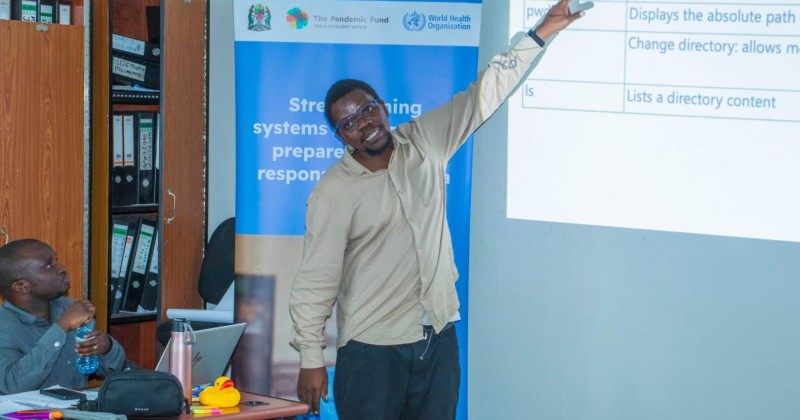
Dar es salaam – Tanzania is strengthening its ability to detect and track disease-causing outbreaks, including those that no longer respond well to medicines, by expanding access to advanced laboratory technology and building national expertise to analyze genetic information data in the country.
Led by the Ministry of Health through the National Public Health Laboratory (NPHL), in collaboration with CIHEB-Tanzania and the World Health Organization (WHO), the initiative is strengthening genomic antimicrobial resistance (AMR) surveillance and other priority pathogen detection across human health, animal health and food safety under a One Health approach.
The initiative began with an assessment of genomic surveillance capacity at four key institutions: NPHL, Central Veterinary Laboratory (CVL), Bugando Medical Centre and Kibong’oto Infectious Diseases Hospital. The assessment identified gaps in equipment, infrastructure, laboratory skills and the ability to analyse genetic information.
To address these gaps, three high-performance computers and a server were installed at NPHL, the national hub for genomics and bioinformatics capacity building. Sequencing and genotyping reagents were also provided to support training and future surveillance activities.
The initiative also invested in national skills. Experts from the human health, animal health, academic and research sectors developed a standardized training package with 11 modules, four on genomics and seven on bioinformatics.
So far, 20 laboratory scientists from institutions including NPHL, Bugando Medical Centre, CVL, Tanzania Infectious Diseases Institute (TIDI), Central Tuberculosis and Leprosy Reference Laboratory (CTRL), Tanzania Bureau of Standards (TBS), Sokoine University of Agriculture (SUA) and laboratories in Zanzibar have been trained in in pathogen detection, characterization, and genomic sequencing for surveillance and outbreak investigations. In addition, 15 professionals from the same institutions received specialized training in genomic data analysis.
These investments are helping Tanzania build the ability to generate and interpret genomic information locally. This can help health authorities better understand what pathogen is causing an outbreak, whether it may be resistant to available medicines, and how it may be spreading, providing evidence to guide surveillance and response.
By bringing together professionals from human health, animal health, food safety, academia and research, the initiative is also strengthening collaboration across sectors. Together, the new infrastructure, standardized training and skilled workforce provide a foundation for expanding national genomic surveillance, strengthening AMR monitoring and enabling Tanzania to respond more effectively to emerging health threats

Contact Us
- Maabara ya Taifa ya Afya ya Jamii
- EPZA area,mandela road
- S.L.P 9083, Dar Es Salaam
- Telephone: +255 734 677 337
- Mobile: +255 734 677 338
Related Links
Useful Links
Visitors Counter
- Today 326
- Yesterday 354
- This Week 1959
- This Month 4535
- All Days 120736